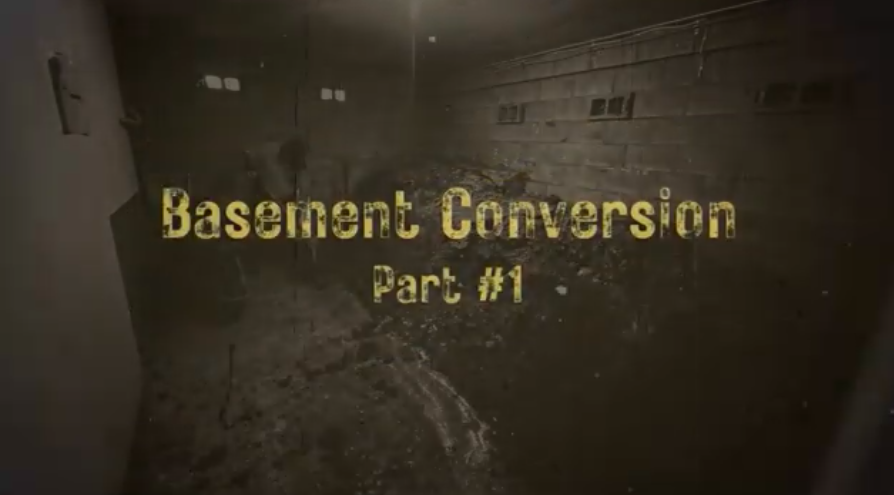
Basement Conversion Part I: Unlocking the Potential Under Your Feet
In a city like Auckland, where land is scarce and moving house is costly, the smartest way to expand is often downwards. Whether you have an existing sub-floor void or a garage ripe for transformation, a basement conversion can double your floor area without consuming your backyard.
But unlike a standard extension, digging under an existing house comes with unique challenges. In Part I of our series, Retro Construction guides you through the critical planning phase—from visualization to the “boring” but vital paperwork.
1. The Vision: More Than Just Storage
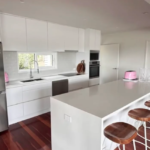
Gone are the days when basements were dark, damp storage lockers. Today, they are high-value asset additions. With the housing market shifting, we are seeing a split in how Kiwis live. While new government rules are making it easier to build detached “granny flats”, many homeowners prefer to keep everything under one roof. A basement conversion is the perfect solution for:
- The “Legal” Home and Income: Creating a self-contained flat to help pay the mortgage.
- Multi-Generational Living: Giving teenagers or elderly parents their own sound-proofed sanctuary.
- The Ultimate Utility Space: Moving noisy laundries out of the main house into a purpose-built, smart washing area.
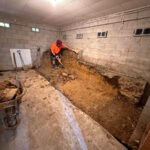
Struggling to visualize it? It is hard to imagine a luxury room when looking at dirt and piles. That is why we use Immediate 3D Visualization. We can render 3D photos of your existing space on-site and overlay potential designs in seconds, letting you see the potential before you commit.
2. The “Hidden” Costs: Preliminaries and Site Setup
If you take one thing away from Part I, let it be this: A building site is a temporary factory. Excavating under a house is complex. It requires conveyor belts for soil removal, temporary propping to hold up your house, and strict safety zones. These costs are known as Preliminaries (P&G).
Many homeowners are surprised to learn that Preliminaries often make up 11–15% of the total project cost. These aren’t “extras”; they fund the fencing, waste management, and supervision required to keep your site legal and safe under the Health and Safety at Work Act 2015.
3. Managing the Money: Competitive Bidding
Excavation and concrete work are the heavy lifters of a basement conversion budget. To ensure you don’t overpay, Retro Construction utilizes a Competitive Bidding process. We don’t just rely on one subcontractor. We obtain multiple quotes for expensive ticket items. This ensures you get competitive market rates, reduces dependency on a single supplier, and often uncovers innovative techniques that can save time on the dig,.
4. The Golden Rule of Insurance
Digging beneath your home affects the structural integrity of your biggest asset. This brings us to the most critical “Part I” preparation: Insurance.
For renovations and extensions, it is generally recommended that the property owner arranges Contract Works Insurance as an extension of their existing home policy.
- Why? If a slip occurs during excavation and damages the existing house, you want a single insurer covering both the old structure and the new works. This prevents disputes between the builder’s insurer and your home insurer.
- Action Step: Before we break ground, speak to your insurance broker to extend your policy.
5. Consents and Compliance
A basement conversion almost always requires a Building Consent because it involves structural changes and weathertightness (waterproofing/tanking). Navigating Auckland Council regulations can be daunting. Our team includes in-house architects and Licensed Building Practitioners (LBPs) who manage this process for you, ensuring that your new space is not just beautiful, but legal and Code Compliant.
Ready for Part II?
Now that the planning, insurance, and costs are sorted, the real fun begins. Stay tuned for Part II, where we will discuss the construction phase, waterproofing (tanking), and interior fit-outs.
Are you ready to dig deep? With over 30 years of industry experience, Retro Construction is East Tamaki’s expert in complex renovations.