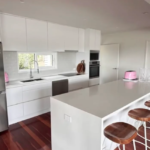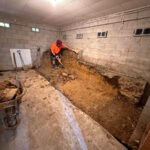
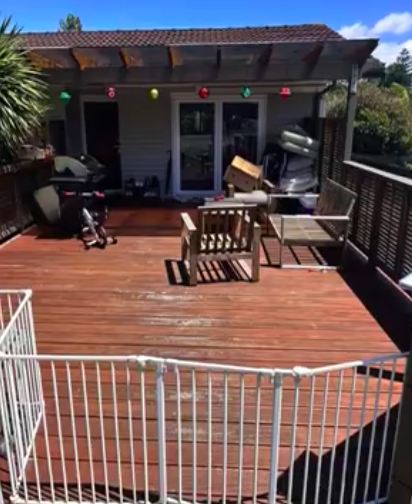
Just in time for Christmas! What a celebration they’ll have in their newly extended home—the perfect opportunity to invite family and friends over for the holidays and showcase their renovations. We’ve reported on this project before (check out our post on October 4th), but now we’ll let the photos speak for themselves as the entire extension is finished! Our client’s exceptional communication throughout the project was brilliant. We thoroughly enjoyed working with him, forming an ideal collaboration while we completed the project. Thank you so much for your trust in us!
Planning a Home Extension in Auckland? Your Ultimate Guide
As families grow and lifestyle needs change, the walls of your home can start to feel like they are closing in. In the current Auckland property market, moving house is often prohibitively expensive. The solution? A home extension.
Whether you are pushing out the back of your lounge for better indoor-outdoor flow or building a detached unit for extended family, a home extension adds value and livability to your property. At Retro Construction, we specialize in managing these complex projects from the first concept to the final Code of Compliance (CCC).
The Two Types of Home Extension
When planning to expand, it is important to understand which “track” suits your property best.
1. The Attached Extension (Expanding the Footprint) This is the classic home extension: enlarging a living room, adding a master ensuite, or widening a kitchen. A perfect example is our recent project for Alvin Naicker. With a newborn baby in the house, Alvin needed a living room extension with a wrap-around deck. Our team, led by Irne Grobler, ensured the living space wasn’t disrupted until absolutely necessary, allowing the family to carry on with life despite the major construction work.
2. The Detached Extension (The “Granny Flat” Revolution) A significant shift is happening in New Zealand housing. We are moving away from “tiny homes on wheels” toward permanent, foundation-based structures. With new regulations expected in 2026 allowing for secondary dwellings up to 70m² without resource consent (in many zones), the “Legalised Small Home” is becoming the gold standard for a home extension. Unlike trailers, these foundation-based extensions are considered “real” houses by banks and insurers, offering better financing options and long-term value.
Visualizing Your New Space
It is hard to imagine how a home extension will change your property just by looking at blueprints. That is why we use immediate 3D visualization technology. We can take photos of your current backyard or lounge and render the design on-site. This allows you to see exactly how the new roofline or deck will integrate with your existing home before we pour any concrete.
The “Hidden” Costs: Preliminaries and Site Setup
A home extension turns your backyard into a “temporary outdoor factory”. To keep your family safe and the site legal, we manage “Preliminaries”—the essential operating costs of a build. On a typical renovation or extension, preliminaries range between 11–15% of the total project cost. This covers:
- Site Establishment: Fencing, portable toilets, and waste management.
- Safety: Protecting children and pets from the construction zone.
- Administration: Managing council inspections and documentation. By being transparent about these costs upfront, we prevent budget shocks later in the project.
Getting the Best Price: Competitive Bidding
Extensions involve heavy trades like excavation, concrete, and roofing. To ensure you get the best value, Retro Construction utilizes a Competitive Bidding process. We do not rely on a single subcontractor. Instead, we obtain multiple quotes for key trades.
- Market Rates: This ensures you are paying fair market prices.
- Reduced Risk: We aren’t dependent on one supplier. If a concrete layer is unavailable, we have vetted alternatives to keep your home extension on schedule.
- Innovation: New subcontractors often bring fresh techniques that can save time and money.
The Golden Rule: Insurance for Extensions
Adding to an existing structure carries specific risks. For a home extension, it is generally recommended that the property owner arranges Contract Works Insurance as an extension of their existing home policy.
- Why? This ensures a single insurer covers both your existing house and the new extension works. If a storm causes damage where the old roof joins the new one, having one policy prevents disputes between two different insurance companies.
- Cost Efficiency: Owner-arranged cover is often more affordable as it avoids duplicate policies. We guide you through this process to ensure there are no gaps in your coverage.
Ready to Expand?
A home extension is a significant investment, but it transforms the way you live. Whether you are looking for a foundation-based granny flat for income potential or simply need more room to breathe, Retro Construction has the “Traditional Experience and Modern Style” to deliver.